
Regulation (EU) 2023/1115 — the EU Deforestation Regulation, or EUDR — requires that coffee placed on the EU market from 30 December 2025 onwards must not have come from recently deforested land, and that operators submit a due-diligence statement to the EU's TRACES NT system with each commercial transaction.
For European coffee importers and roasters, this means every green coffee lot must arrive with a documented, verifiable supply chain — from the plot of land where the coffee was grown, through the mill or curing works, to the point of EU entry.
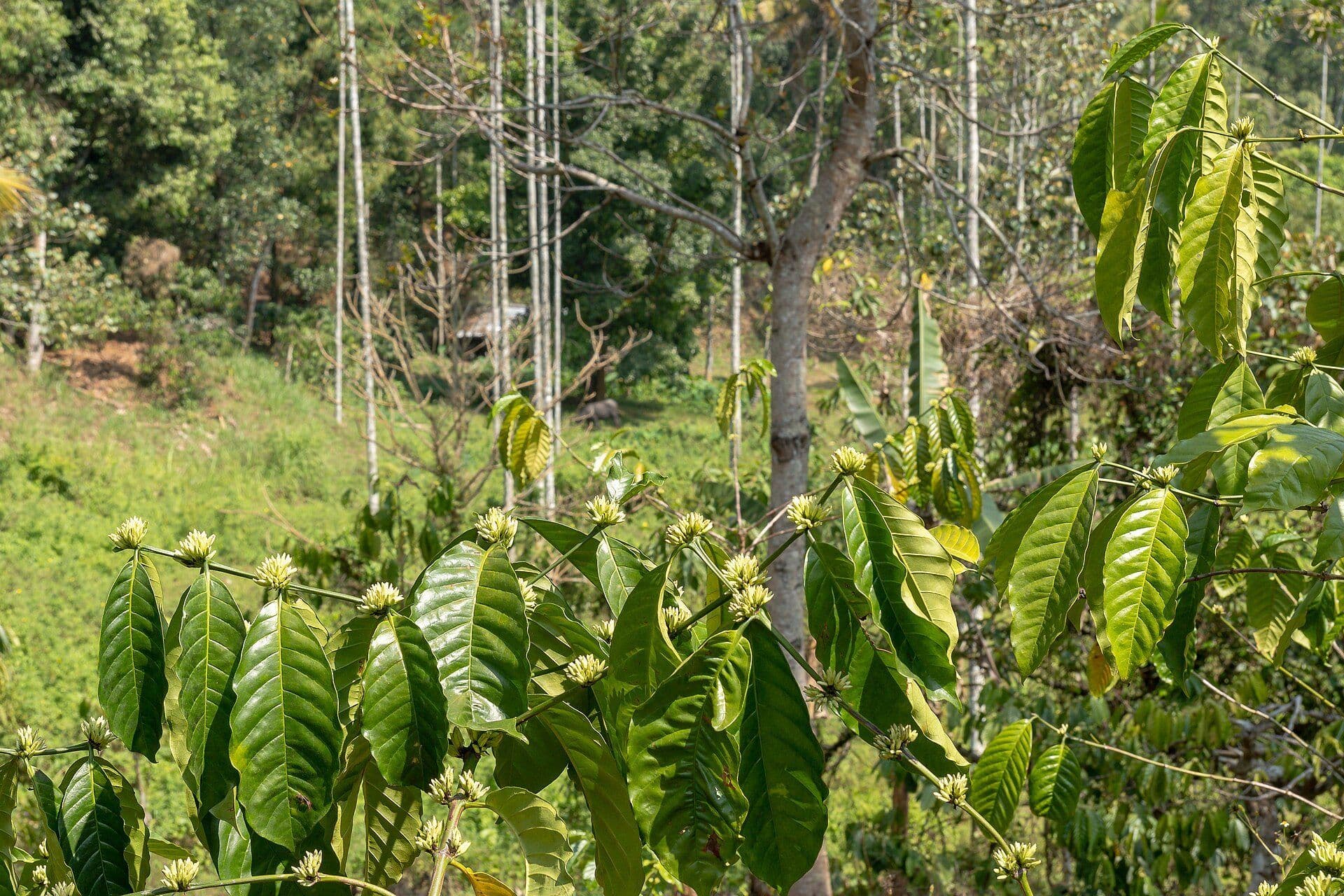
Indian coffee is positioned well. Karnataka, Kerala and Tamil Nadu — India's three coffee states — have robust, auditable forest-cover records, and Rainforest Alliance certified estates and curing works carry third-party chain-of-custody documentation that directly supports EUDR due-diligence statements.
What does EUDR require for green coffee imports?
Under EUDR, any operator placing green coffee on the EU market must submit a due-diligence statement through TRACES NT that includes: the product description (HS code, weight, quantity), the country of production and sub-national region, the geolocation of all plots where the product was produced, a statement that due diligence was carried out and that no deforestation risk was identified, and a reference number for the statement.
Versa International Traders provides the documentation for each lot that an EU importer needs to complete that statement: GPS coordinates of the farm or estate plots, satellite imagery evidence of forest cover as at 31 December 2020, and a chain-of-custody mill or curing works record. For Rainforest Alliance certified lots, the RA transaction certificate provides additional third-party verification.
Why is Indian coffee EUDR compliant?
- India's coffee states have verifiable forest-cover baselines prior to the 31 December 2020 cut-off date
- Coffee cultivation in India is historically shade-grown — a farming system that preserves tree cover rather than replacing it
- Karnataka, Kerala and Tamil Nadu estates are typically large, registered holdings with documented plot boundaries
- Rainforest Alliance certified estates carry third-party audits covering forest protection, biodiversity and traceability
- India is categorised as a standard-risk country under EUDR, requiring standard due diligence rather than enhanced procedures
Does Versa International Traders provide EUDR documentation?
Yes. For every EU-bound green coffee shipment, Versa International Traders provides: GPS polygon or centroid data for the farm or estate supplying the lot, satellite land-use evidence from Global Forest Watch or equivalent showing no deforestation since 31 December 2020, a curing works or mill record confirming the chain of custody from farm to export container, and — for Rainforest Alliance certified lots — a valid RA transaction certificate.
The EU importer of record uses this documentation to file the TRACES NT due-diligence statement. Versa International Traders does not file the statement on behalf of the EU operator (the regulation requires the statement to be filed by the EU operator or its representative), but provides all supporting evidence to enable it.
How do I order EUDR-compliant coffee from India?
Contact Versa International Traders with your grade, quantity, destination EU country, and whether you require Rainforest Alliance certified lots. We confirm availability, send a sample from the lot, issue a price quote and prepare the EUDR documentation package alongside the standard export documents.
Frequently asked questions about EUDR compliant green coffee from India
What is EUDR and does Indian coffee comply with it?
The EU Deforestation Regulation (EUDR) — Regulation (EU) 2023/1115 — requires that coffee placed on the EU market from 30 December 2025 onwards must come from land that has not been deforested after 31 December 2020, and operators must submit a due-diligence statement to the EU's TRACES system. Indian coffee qualifies because India's coffee-growing states — Karnataka, Kerala and Tamil Nadu — have verifiable forest cover data from before 2020, and Rainforest Alliance certified lots carry additional third-party chain-of-custody documentation. Versa International Traders provides EUDR-ready documentation — geolocation data for the farm or estate, forest-cover evidence and the Rainforest Alliance certificate — with every EU-bound shipment.
What does Rainforest Alliance certification mean for a green coffee lot?
Rainforest Alliance (RA) certification means the farm or estate was audited against the Rainforest Alliance Sustainable Agriculture Standard, which covers environmental criteria (forest protection, biodiversity, soil and water), social criteria (worker welfare, wages, housing) and economic criteria (farm management, record-keeping, traceability). For buyers, RA certification supplies the third-party audit trail needed for EUDR due-diligence statements in the EU, corporate sustainability commitments, and retailer specifications in the UK and USA. Versa International Traders supplies RA-certified lots on request, with a valid Rainforest Alliance transaction certificate for each shipment.
What is MOQ for green coffee beans from Versa International Traders?
The minimum order quantity is 1 FCL — one full container load. A 20ft container carries approximately 19.2 metric tonnes (320 × 60 kg bags) of green coffee. Trial lots of less than one container can be arranged for new buyers evaluating a grade or origin before committing to full container volumes.
What Indian coffee grades are available to UK and European buyers?
UK and European specialty roasters typically buy Indian Plantation (washed Arabica) for clean filter and espresso bases, and Monsooned Malabar Arabica for its distinctive mellow, low-acid character. Indian Robusta — Robusta Cherry AB and Robusta Parchment — is used in espresso blends and commercial roasting. All grades are available in AA, A, AB and PB screen sizes. We match the grade and processing profile to your roast plan and provide a sample before you contract.
Guides on EUDR compliant green coffee from India
- How to import green coffee beans from India to the USA: a guide for US roasters and importersUS roasters and importers sourcing green coffee from India face a small number of regulatory and logistics steps: FDA Prior Notice, CBP entry and a phytosanitary certificate from India. Beyond compliance, Indian Arabica (Plantation, MNEB), Robusta natural grades and specialty lots offer genuine origin differentiation at competitive FOB prices. This guide covers the full import process.
- Indian green coffee beans for European roasters: Germany, Netherlands, Italy and beyond — 2026 guideEuropean roasters and importers have sourced Indian coffee — particularly MNEB and Plantation Arabica — for generations, primarily for Italian-style espresso blends. EUDR compliance (EU Deforestation Regulation) adds a new documentation requirement for Indian coffee entering the EU from 30 December 2025. This guide covers EUDR compliance, grades, transit times and how to order.
- Sea freight from India to Europe in 2026: transit to Hamburg, Rotterdam and Antwerp for coffee exportersSea freight from India to Northern European ports (Hamburg, Rotterdam, Antwerp) takes 20–25 days via the Suez Canal. This guide covers transit times, routing, Suez disruption risk, EUDR documentation requirements and what Indian coffee and spice exporters need to prepare for EU shipments.
- EUDR and Indian coffee: what UK and EU buyers need to know when importing in 2026The EU Deforestation Regulation (EUDR) became enforceable on 30 December 2025 for large operators. Any green coffee entering the EU must be EUDR-compliant — meaning the growing land must not have been deforested after 31 December 2020 and the EU importer must file a due-diligence statement. This guide explains what UK and EU buyers need from Indian suppliers.